
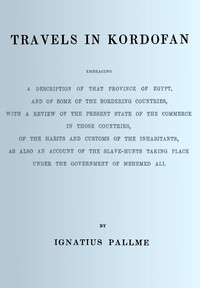
Travels in Kordofan : Embracing a description of that province of Egypt, and…
First published in the 1840s, Ignaz Pallme's account is a straightforward record of his time as a merchant in Kordofan, a province of Ottoman Egypt (in modern-day Sudan). He wasn't a famous explorer on a grand mission; he was a guy trying to work. The book follows his journey from the Nile into the interior, detailing his stops in towns like El Obeid, his dealings with local rulers, and his observations on everything from the ivory trade to the geography.
The Story
There's no traditional plot, but there is a clear narrative thread: Pallme's attempt to understand and operate within a foreign land. He describes the landscape, the challenging travel, and the bustling markets. A big part of the story is his interactions with the people—the powerful sultans he must negotiate with, the Arab merchants he trades alongside, and the diverse local populations. He writes about their social structures, their laws, their farming methods, and their religious practices. The 'action' comes from the daily challenges of travel, commerce, and diplomacy in a place where European presence was rare and often unwelcome.
Why You Should Read It
What makes this book special is its lack of polish. It doesn't have the romantic flair of later Victorian explorers. Pallme's perspective is practical, sometimes frustrated, and always grounded. You get a sense of the day-to-day reality that gets smoothed over in more dramatic tales. His descriptions feel immediate. He's not writing for glory; he's documenting what he sees, which includes both his admiration for certain aspects of society and his clear biases as a 19th-century European. Reading it is like having a direct line to the past, complete with all its uncomfortable truths and fascinating details. It’s a primary source that lets you build your own picture.
Final Verdict
This is a book for a specific, but curious, reader. It's perfect for anyone who loves raw historical travelogues and primary sources. If you enjoy books like Richard Francis Burton's journals or are fascinated by pre-colonial African history, you'll find a goldmine here. It's also great for readers who want to look beyond the big-name explorers and hear from someone who was 'on the ground' for an extended period. A word of caution: it's not a fast-paced adventure novel. Think of it as an immersive, sometimes slow, walk through a lost moment in time with a very observant companion.
Nancy Hernandez
10 months agoAs someone who reads a lot, the content flows smoothly from one chapter to the next. Exceeded all my expectations.
Edward Harris
2 months agoBeautifully written.



William Williams
7 months agoWithout a doubt, the flow of the text seems very fluid. I couldn't put it down.